
Four Risks Dominating Board Agendas in 2026 and How Internal Audit Teams Should Frame Them
Key Risks Shaping Board Priorities and Audit Strategies
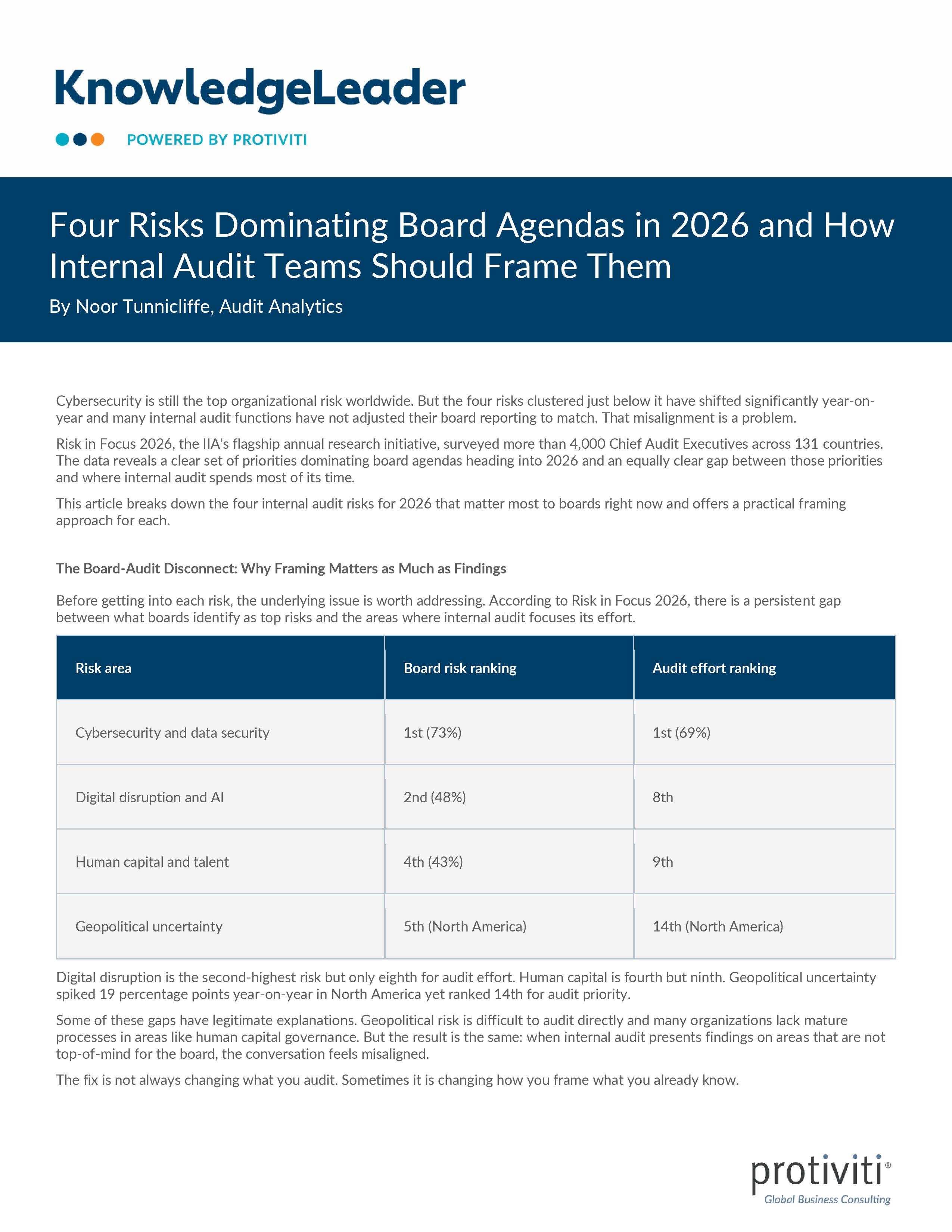
Boards are facing a rapidly changing landscape, with four critical risks demanding their attention: cybersecurity threats, digital disruption driven by AI, geopolitical uncertainty, and challenges in managing human capital. For internal audit teams, the real opportunity lies not just in identifying these risks, but in connecting them directly to organizational strategy. Auditors can add tremendous value by translating complex risks into clear, actionable insights that help leaders make smart decisions instead of focusing on technical jargon or control checklists.
Organizations need proactive advisors who understand both business impact and emerging trends now more than ever. Internal audit professionals are encouraged to frame cybersecurity in terms of what matters most and how a breach could affect operations, finances and reputation. When it comes to AI and digital disruption, auditors should highlight both opportunities and risks, ensuring governance frameworks keep pace with technology. Geopolitical shifts require tailored analysis, mapping out supply chain dependencies and market exposures. For human capital, the focus should be on aligning talent strategies with long-term goals, offering constructive guidance where formal plans may be lacking.
Key Takeaways:
- Bridge the gap between risk identification and strategic decision making.
- Communicate risks in business language for maximum board impact.
- Stay ahead of emerging issues like AI and workforce planning.
- Use every interaction to demonstrate your role as a trusted advisor.