
Ten Risk Oversight Principles
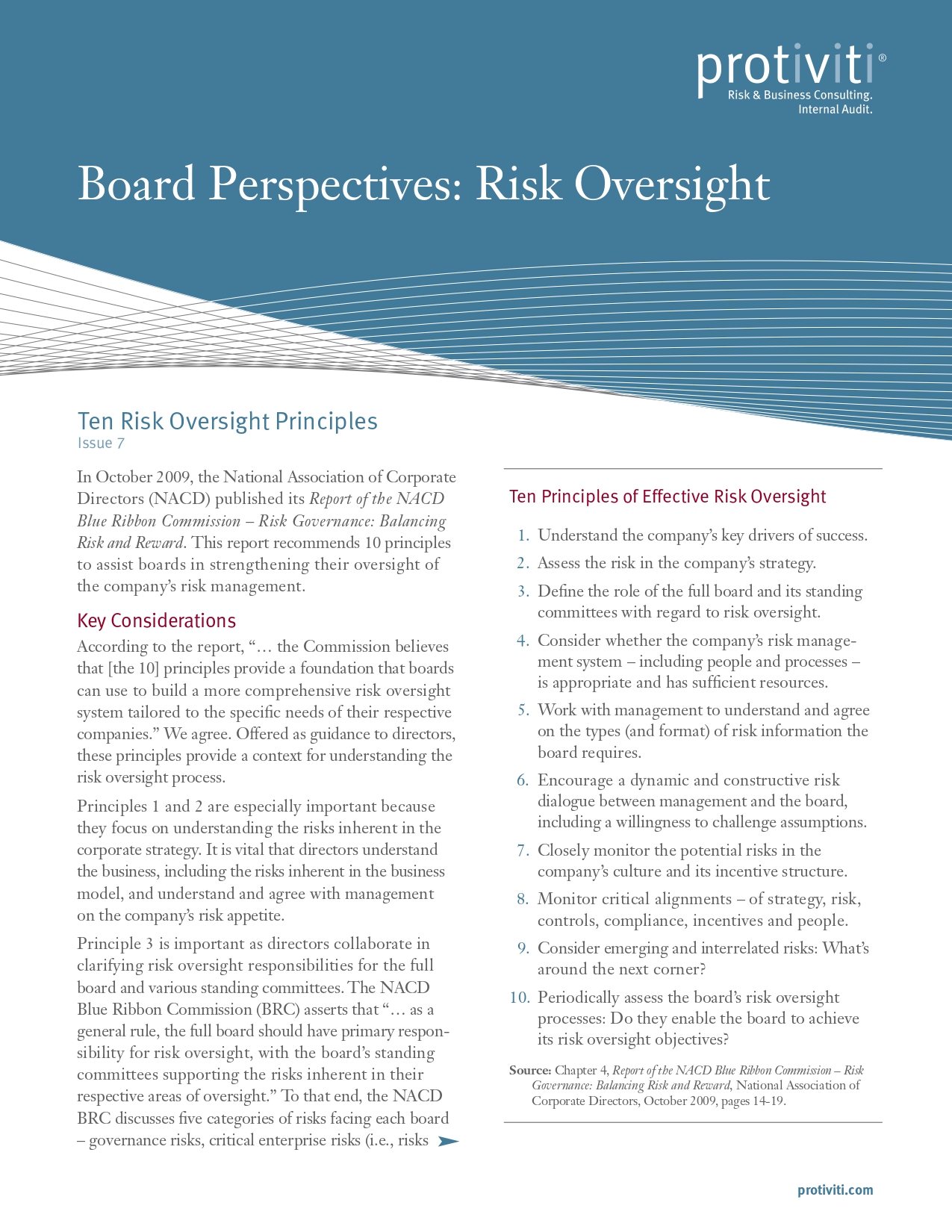
Strengthening Boards With Key Risk Oversight Principles
Board Perspectives: Risk Oversight, Issue 7
Effective risk management plays a crucial role in ensuring an organization's success. Boards play a pivotal role in this process and adopting a structured approach to risk oversight can significantly enhance their effectiveness. By focusing on ten core principles, boards can better align strategy, risk management, and compliance while addressing challenges such as emerging risks, cultural dynamics and incentive structures. This framework empowers boards to anticipate threats, evaluate their impact and proactively implement measures to protect organizational success. This guidance is invaluable for ensuring resilience and maintaining a competitive edge.
To succeed, board members must develop essential skills, including understanding the drivers of organizational success, fostering open and constructive communication with management and challenging assumptions to make informed decisions. Practical strategies include clearly defining roles and responsibilities, prioritizing actionable insights over excessive data and regularly evaluating the effectiveness of risk oversight processes. Boards are encouraged to focus on emerging risks, align key organizational functions and engage in meaningful dialogue to address sensitive issues. Ultimately, adopting these practices enables boards to build a robust risk management framework tailored to their organization's needs, ensuring long-term sustainability and growth.
Key Takeaways:
- Gain clarity on risks inherent in strategy and business models.
- Build strong collaboration between boards and management to challenge assumptions.
- Stay ahead of emerging risks and ensure alignment across strategy, controls, and incentives.
- Regularly evaluate risk oversight processes to strengthen governance and decision making