
Shifting Investment Preferences Are Reshaping Fund Audit Fee Landscapes
Looking Ahead at a Changing Investment Models
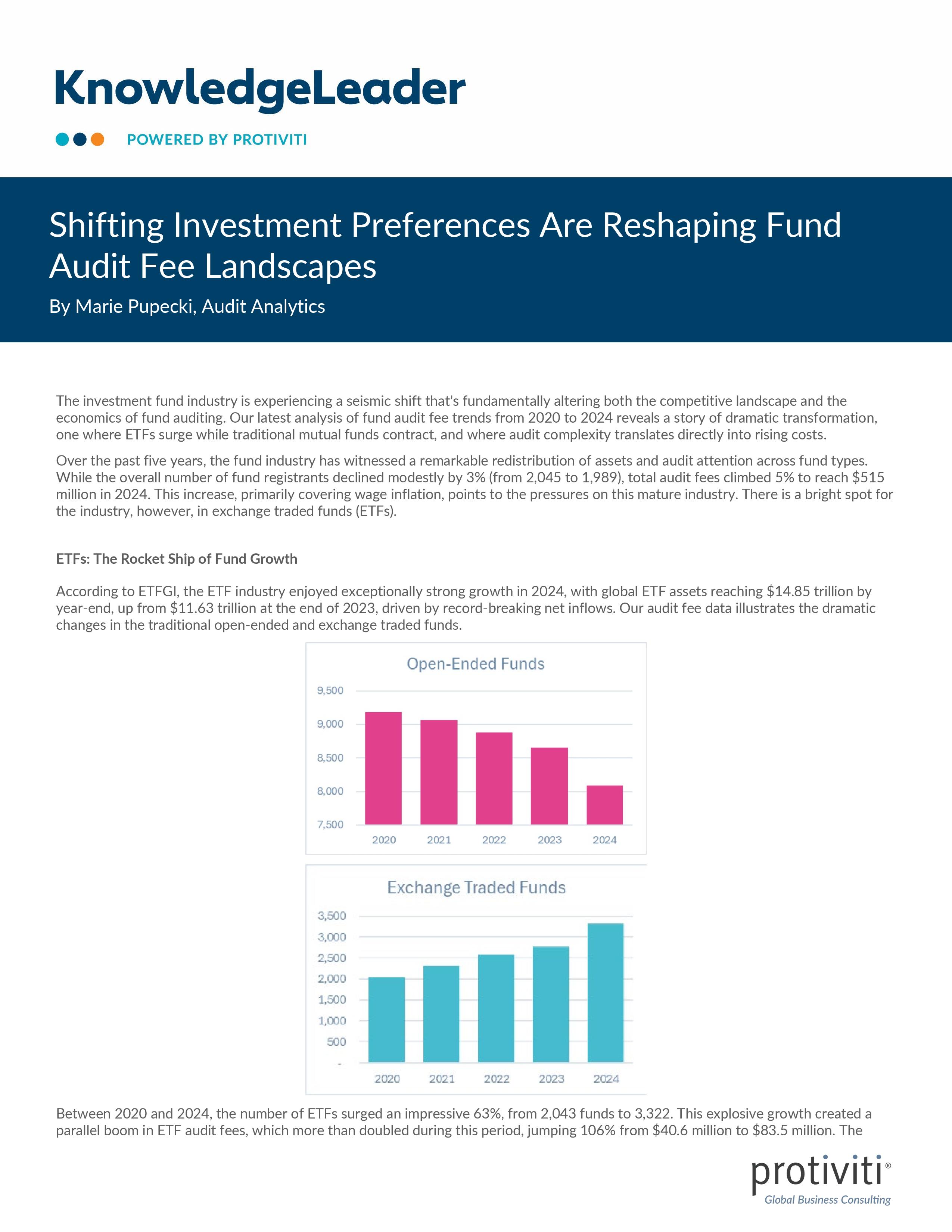
The investment fund industry is undergoing a dramatic transformation, as investor preferences shift away from traditional mutual funds and toward the fast-growing world of exchange-traded funds (ETFs). This evolution is fundamentally changing how audit fees are structured and managed. As ETFs surge in popularity, regulatory demands and enhanced disclosure requirements have made auditing these funds more complex and costly. Fund managers now face a landscape where audit expenses are driven not simply by fund size, but by the sophistication and structure of their products. With mutual funds on the decline and ETFs expanding rapidly, staying ahead of these trends is essential for anyone looking to thrive in today’s market.
Now more than ever, managers need to be strategic about how they approach fund audits. Choosing an audit firm with specialized expertise can unlock greater efficiency and help manage rising costs. It’s also crucial to budget carefully for higher audit fees, especially when launching new ETFs or converting mutual funds. Operational agility, adapting quickly to regulatory changes and product innovation, is becoming a key competitive advantage. Ultimately, those who understand and respond to the growing complexity of fund audits will position themselves for success in this evolving financial landscape.
Key Takeaways:
- Audit fees are increasing, driven by regulatory complexity and more sophisticated fund products.
- ETFs are booming, while mutual funds continue to shrink in number and relevance.
- Aligning fund strategies with audit firm strengths is essential for operational efficiency.