
Slimmed-Down CFPB Scales Back Regulatory Priorities, Shifts Focus Back to Big Banks
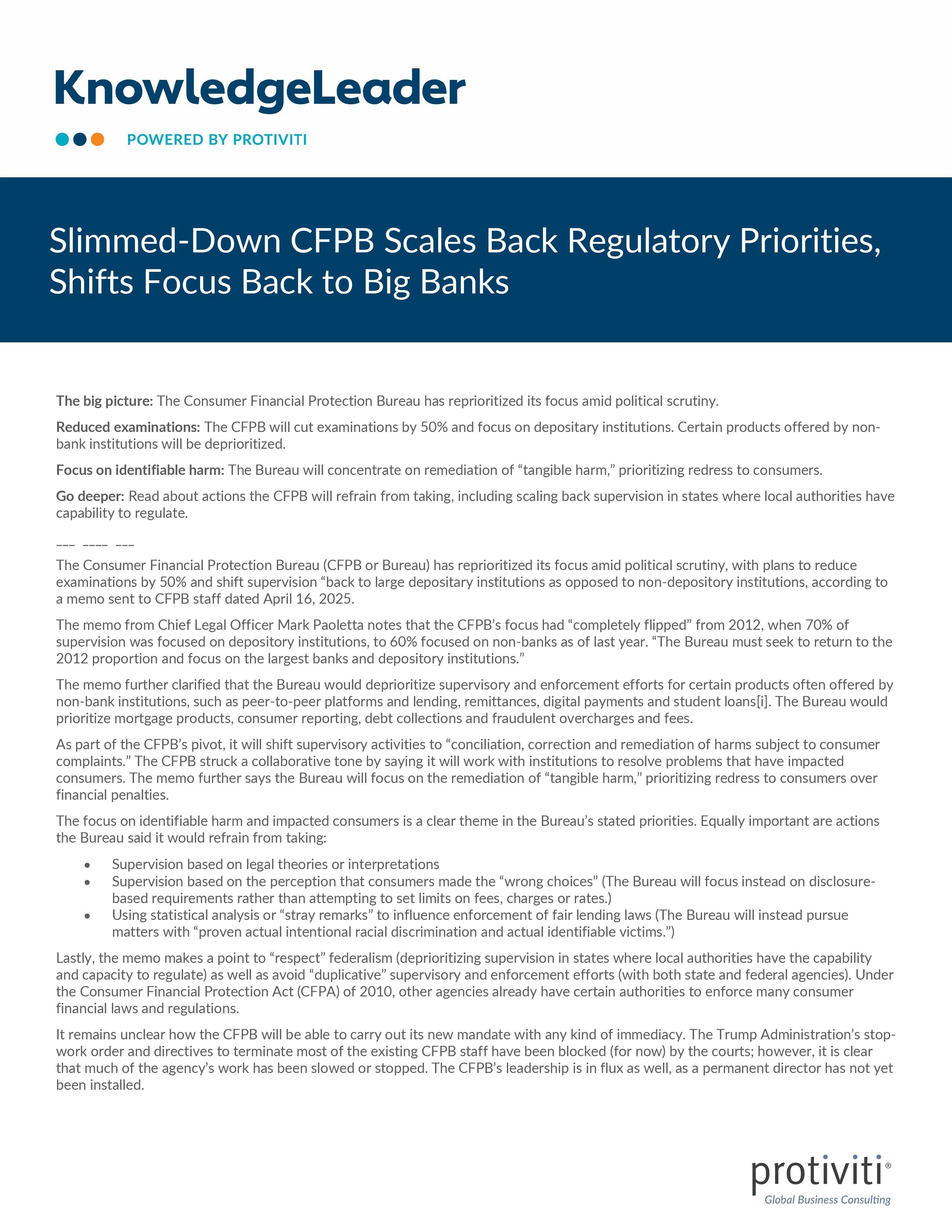
Tracking CFPB Strategic Refocus
The Consumer Financial Protection Bureau (CFPB) is making waves with a major shift in its regulatory priorities, scaling back its oversight of non-bank financial institutions while refocusing on large depository institutions. Plans to cut examinations by 50% reflect a move toward addressing "tangible harm" to consumers through collaboration and remediation rather than punitive financial penalties. By reducing redundant supervision in states with capable local regulators, the CFPB signals a deregulatory stance that could provide breathing room for emerging financial institutions. This shift comes at a critical time, offering these organizations the chance to innovate and refine their risk management strategies without looming regulatory pressures.
For businesses navigating this landscape, the message is clear: now is the time to act. Proactive compliance strategies are key to staying ahead in an environment where regulatory priorities can change rapidly. Companies should keep a close eye on state-level developments, invest in transformative technology, and ensure that their risk management practices align with federal expectations. While the CFPB’s current direction may ease immediate concerns, it’s crucial to remain prepared for future shifts. This period of reduced scrutiny is not just a reprieve—it’s an opportunity to build stronger, more resilient compliance frameworks that will stand the test of time.
Key takeaways include:
- The CFPB is refocusing on large banks while scaling back oversight of non-bank financial products.
- Consumer redress for tangible harm takes priority over financial penalties.
- Businesses should monitor state regulations and enhance compliance programs.
- This is a prime opportunity to strengthen risk management and prepare for future changes.