
Wanted: A Cost-Effective Approach to Validating Performance of the Internal Control Structure
Building Cost-Effective Strategies for Internal Control Validation
The Bulletin: Volume 2, Issue 4
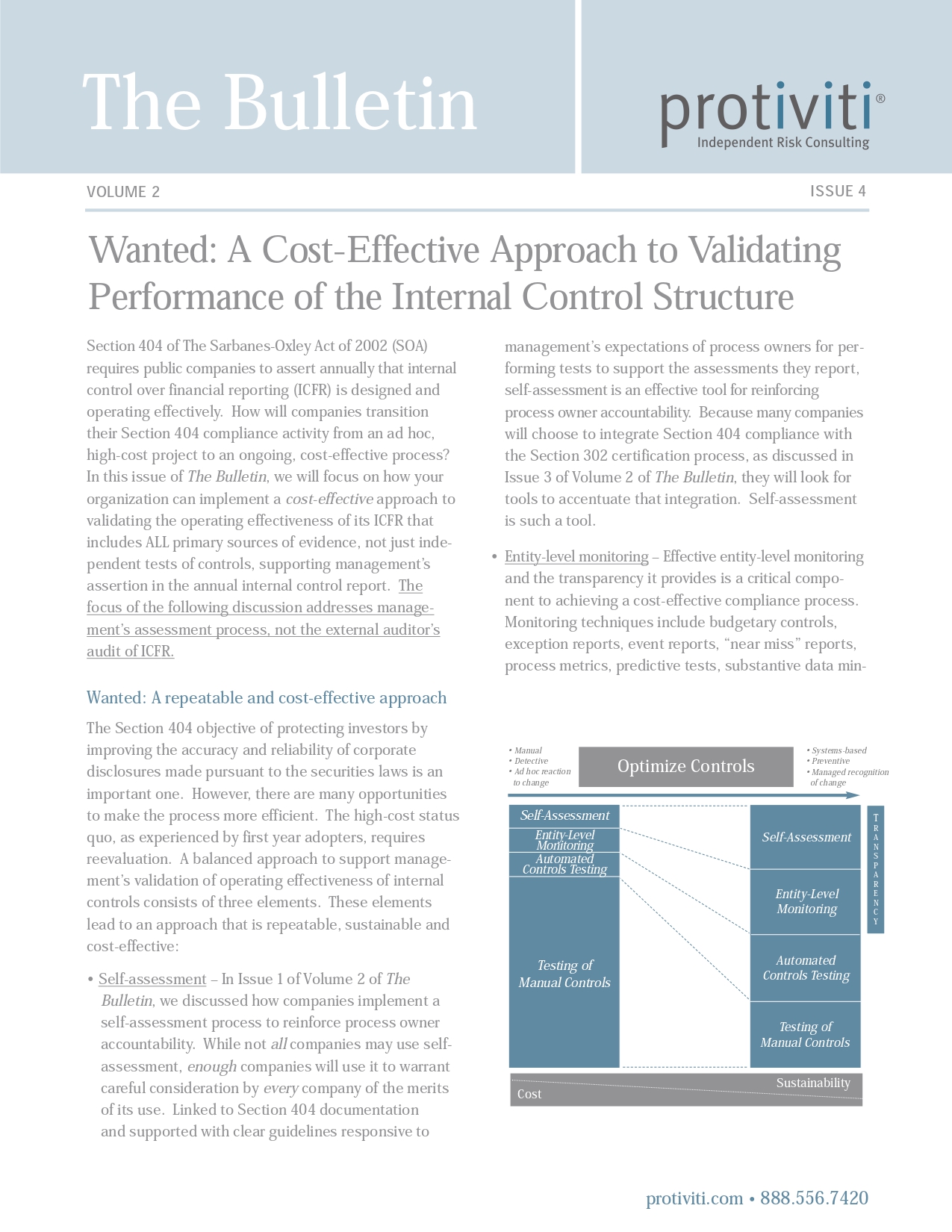
Organizations face mounting pressure to ensure that their internal controls are effective and cost-efficient. The shift from expensive, last-minute compliance efforts to sustainable strategies is essential for protecting financial transparency and meeting regulatory demands. Leaders must rethink how they validate control, moving beyond traditional testing to embrace smarter, integrated approaches. Companies can build stronger control environments and streamline their compliance processes by prioritizing risk assessment, self-evaluation and proactive monitoring,
Success hinges on practical skills like identifying key risks, implementing self-assessment programs, and leveraging technology to automate controls. Project management discipline ensures that compliance efforts stay on track, with clear accountability and timely remediation of deficiencies. Instead of reacting to problems, organizations are encouraged to focus on preventive measures, optimize their processes, and make informed decisions based on real-time insights. The goal is to create a compliance culture that is both effective and efficient, delivering lasting value while reducing unnecessary costs.
Key Takeaways:
- Move from reactive compliance to sustainable, proactive strategies.
- Focus efforts on risk-based assessments and self-evaluation.
- Harness automation to simplify and improve control testing.
- Use strong project management to drive accountability and results.